


Why treat baby teeth?
Baby teeth help with chewing and speech and preserve space for permanent teeth. Untreated decay can lead to pain or infection.
- Maintain chewing function
- Protect space for permanent teeth
- Prevent pain and infection
Prevention and early treatment
A cavity may begin without pain and progress gradually. Early assessment often allows gentler care and better preservation of baby teeth.
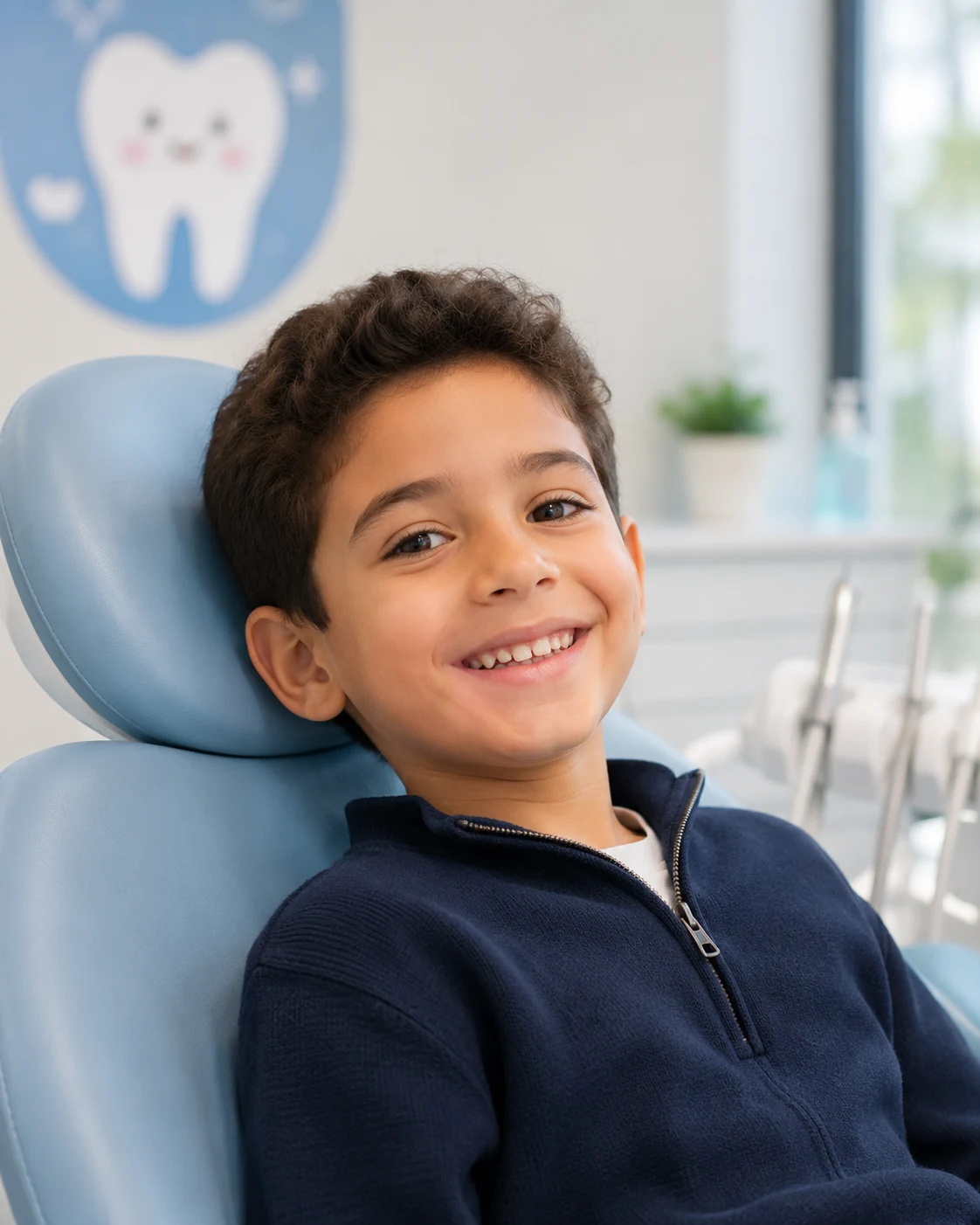
Baby teeth help with chewing and speech and preserve space for permanent teeth. Untreated decay can lead to pain or infection.
The decision depends on the depth of decay, the child’s age, the condition of the tooth, symptoms and ability to cooperate.
Prevention includes brushing twice daily with fluoride toothpaste, limiting frequent sugar exposure and attending regular check-ups.
Frequently asked questions
Yes. Early decay may progress without symptoms, which is why preventive visits remain important.
The most suitable option depends on the depth of decay, the condition of the tooth, the child’s age and when the tooth is expected to fall out.
Brush twice daily with age-appropriate fluoride toothpaste, limit frequent sugar exposure and maintain adult supervision.